ServicesSurge Protection
Surge Protection in Westworth Village
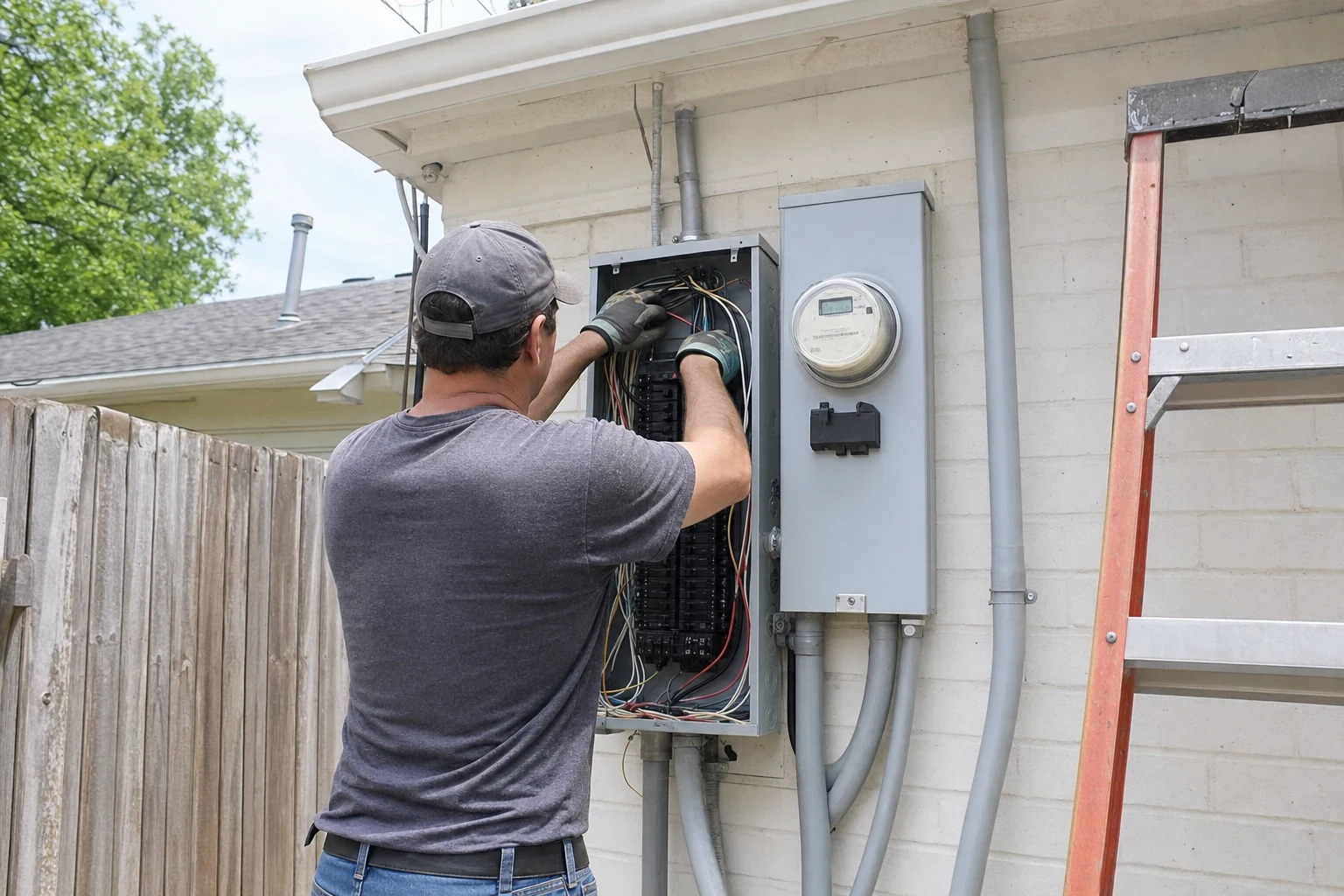
We install whole-home surge protection at your electrical panel, so a spike from the utility or a nearby strike is clamped before it reaches your appliances. Before we fit anything, we test the grounding it depends on, because a protector is only as good as its path to earth.
What Whole-Home Surge Protection Does
A surge is a brief jump in voltage, often lasting a fraction of a second. It can arrive from outside, when the utility switches loads or lightning hits nearby, or from inside your home when a large motor like an air conditioning compressor cycles on and off. Small, repeated surges wear down the circuit boards in ranges, washers, HVAC controls and chargers long before one large event finishes them off.
A panel-mounted surge protective device sits beside your breakers and diverts excess voltage to ground across every circuit at once. Plug-in strips still have a place at a desk or entertainment center, but they cannot protect hardwired equipment like your furnace, dishwasher or EV charger. The two work best together, and we will tell you plainly where each one belongs.
What the Job Covers
Checking grounding and bonding
We look over the ground rod connection, the grounding electrode conductor and the bonds to gas and water piping. Anything corroded, loose or absent gets shown to you and fixed first, because a surge device with a poor ground has no safe place to send the energy.
Looking over the panel
We make sure there is space for a dedicated two-pole breaker and that the bus and current connections are in good shape. An overcrowded panel or scorched terminals are noted before anything new goes in.
Protector mounted at the panel
The device goes as near its breaker as the panel permits, with short, direct leads. Long or coiled wires add resistance and slow the protector's response.
Protection for coax and data lines
Surges can also arrive on phone, internet and cable TV lines. We can protect them where they come into the house and make sure they share the panel's grounding system.
Advice for individual outlets
We point out where a good plug-in protector gives sensitive electronics an extra layer, and which aging strips with dark indicator lights should be thrown out.
Signs Your Home Needs Surge Protection
- Electronics failing early
- Appliance control boards, garage door openers or smart thermostats quitting well before their time often point to repeated small surges.
- Lights dim when the AC starts
- A noticeable flicker as large motors kick on means voltage is swinging inside your home. That swing stresses everything else on the system.
- Damage after a storm
- If a thunderstorm left a router, TV or appliance dead while the breakers never tripped, a surge likely came in on the power or cable lines.
- New expensive equipment
- Adding an EV charger, a generator, a battery backup system or a new HVAC unit puts costly electronics on your circuits. That is a sensible time to protect the whole panel.
- An old or unknown protector
- Surge devices wear out as they absorb hits. If yours has no working indicator light, or you are not sure one exists, it is worth a look.
How a Surge Protection Visit Runs
- 1
Walkthrough and testing
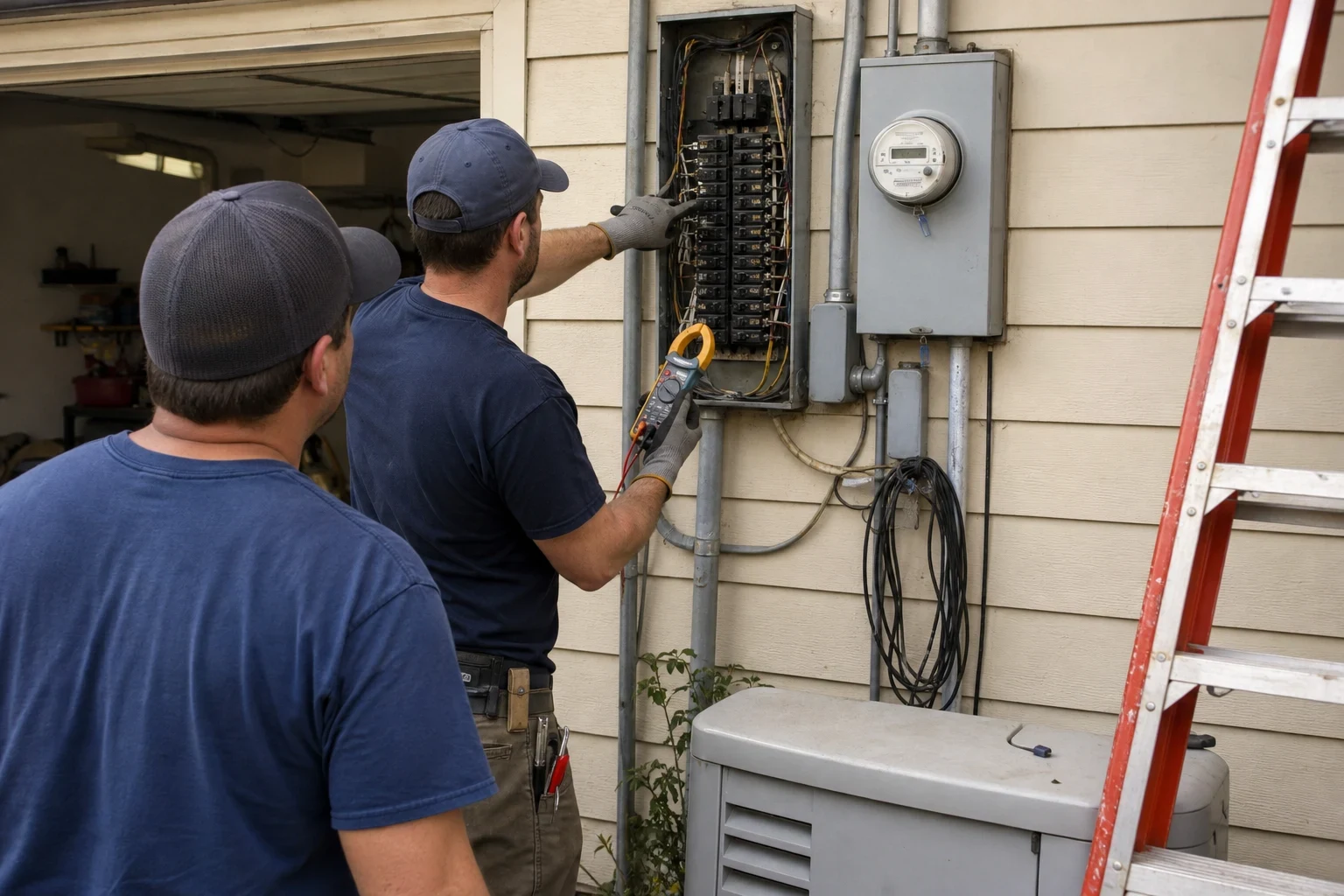
We start at the meter and panel, then trace the grounding and bonding. You hear what we found in plain terms before any work begins.
- 2
Options and a clear scope
We explain what we recommend and why, including any grounding corrections. Nothing is added to the job without your approval.
- 3
Safe shutdown and install
We turn off power at the main, verify the panel is dead with a meter, and only then open it. The device and its breaker go in with tight, torqued connections, and the panel cover goes back on cleanly.
- 4
Power-up and confirmation
We restore power, check the status lights and confirm your circuits come back as they were. We show you what the indicator should look like so you can check it yourself later.
- 5
Permit and inspection
Where the local jurisdiction requires a permit and inspection for this work, we arrange it and schedule around you.
What Moves the Cost
Most surge protection jobs are straightforward, and the price is settled with you before we start. What changes it is usually what we find behind the panel cover and at the grounding system, not the device itself.
- Condition of the grounding
- A sound ground rod and proper bonding keep the job simple. A missing bond, a corroded clamp or an undersized conductor adds correction work.
- Panel space and condition
- If there is no open slot for the breaker, we may need to rearrange circuits. A panel with damage or overheating may need repair first, or a conversation about panel upgrades.
- Level of protection
- Devices differ in how much surge current they can handle and how they report their status. We match the device to your equipment, not the most expensive option.
- Extra lines and locations
- Adding protection on coax, data lines or a detached garage subpanel adds parts and time.
Surge Protection Questions
- Will a whole-home protector save my equipment if lightning hits the house?
- Not reliably. When lightning strikes your home or its service line, the energy involved is far beyond what residential surge equipment is designed to absorb. Where a panel device earns its place is with the everyday events: strikes some distance away, switching on the utility grid and large motors cycling inside your home. Those smaller surges are what quietly wear down electronics over the years.
- Do I still need plug-in surge strips?
- For sensitive electronics like computers and home theater gear, a good plug-in strip adds a useful second layer. The panel device handles the large surge, and the strip deals with what is left at the outlet. Strips do nothing for hardwired appliances, which is why the panel device comes first.
- How long does the installation take?
- When the grounding is sound and the panel has space, the work is usually done within a short visit. Your power is off only while the panel is open. Grounding corrections or circuit rearranging add time, and we tell you that before we begin.
- How do I know if my surge protector still works?
- Most panel devices have indicator lights that show protection is active. If the light is out or shows a fault, the device has done its job and needs replacing. We point it out on the day so you know what to look for.
- Can you add surge protection when you install a generator or EV charger?
- Yes, and it is a good time to do it, since the panel is already being opened. We can include it with generator installation, EV charger installation or a panel upgrade so it is one visit instead of two.
Protect the Equipment Already in Your Home
We will test your grounding, check your panel and explain what protection makes sense before any work starts. Homeowners in Westworth Village, River Oaks and the surrounding Fort Worth area can set a time by phone.