ServicesPanel Upgrades
Panel Upgrades in Westworth Village
Your electrical panel decides how much power your home can use safely and how well it protects every circuit. We size a new panel to the way you live now, install it with care, and keep you informed from the first test to the final inspection.
When Your Panel Needs More Than a Repair
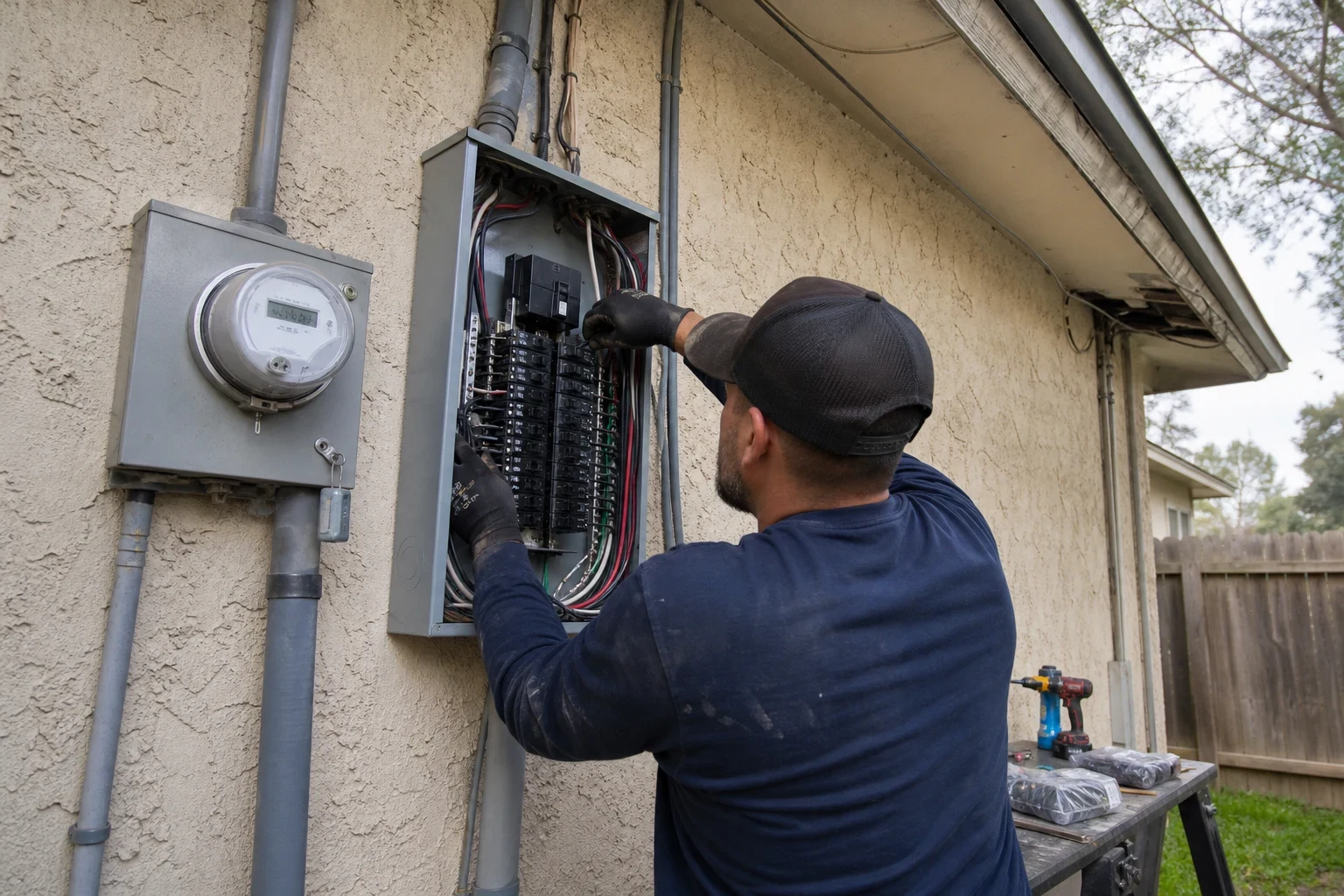
Upgrading a panel means swapping out the main breaker box, and often the service entrance feeding it, for equipment rated to the load your home really carries. Plenty of panels went in when a house ran one window unit and a gas range. That same box may now be feeding central air, an electric dryer, a home office and possibly an EV charger.
Not every tired panel needs replacing. Sometimes a loose lug, a single failed breaker or a crowded neutral bar is the real problem, and a repair is the honest answer. We look first, explain what we found, and recommend an upgrade only when the panel can no longer protect your home the way it should.
When replacement is the right step, we treat it as safety work first. Power is shut off and verified dead before anything is touched, every conductor is labeled before it moves, and nothing is energized again until it has been checked.
What Comes With a Panel Upgrade
- Sizing by load calculation
- We total the demand from your appliances, heating and cooling, plus anything you plan to add. That figure sets the panel size, so you neither pay for unused capacity nor run out of room a few years from now.
- Permits, inspections and the utility
- The permit and inspections are ours to handle as the local jurisdiction requires. If the utility has to cut and restore service, we set that timing with them.
- New box, new breakers
- We never carry old breakers over. Every circuit gets a fresh breaker sized to its wire, and AFCI and GFCI protection goes in wherever current code requires it.
- Ground and bond checks
- We inspect the grounding electrode, the bonds to water and gas piping, and the separation between neutral and ground. Weak grounding is among the faults we find most often behind older panels, and it is seldom visible from outside.
- A readable breaker directory
- We test which outlets and lights each breaker feeds, then label them in plain language. With a flashlight in an outage, you can find the right breaker without guesswork.
Signs Your Panel Is Due for Attention
Breakers that trip under normal use
If the main or a large breaker trips when the air conditioner and dryer run together, the panel may be undersized for your home. It can also point to a failing breaker, which we test before drawing conclusions.
Warmth, buzzing or a burnt smell
A panel cover should never feel hot or hum. Heat and odor usually mean a loose connection or a breaker breaking down inside, and it is worth turning off that circuit and scheduling a visit.
Rust, scorching or melted plastic
Moisture inside an outdoor panel or discolored bus bars tell us connections have been arcing or corroding. This damage tends to spread rather than settle.
Fuses or a brand with a poor record
Fuse boxes and certain older panel lines have known problems with breakers that fail to trip. Insurers sometimes ask about them, too.
No room for what you want to add
Tandem breakers everywhere and no open slots mean adding an EV charger, a generator inlet or a remodel circuit has nowhere safe to go.
What Moves the Cost of a Panel Upgrade
The price depends on what your home needs and what sits behind the current panel. We give you a written estimate after the assessment, broken out by line item, so you can see where the money goes before any work begins.
Panel size and service rating
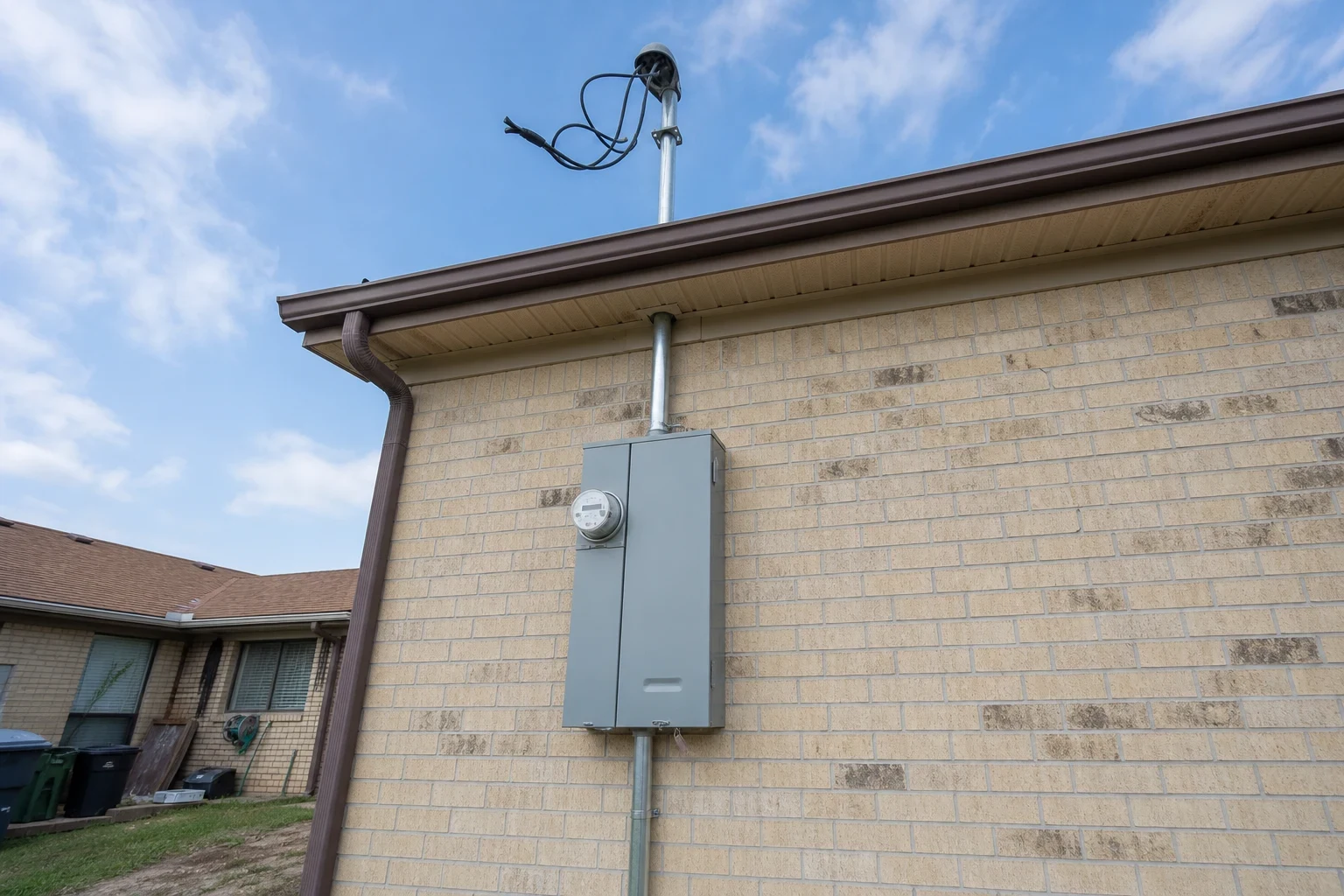
Moving to a higher amperage service often means a new meter base and larger service conductors, not just a new box.
Location and access
An outdoor panel on an exterior wall is simpler than one recessed in a finished closet or garage wall that needs patching after.
Condition of existing wiring
Brittle insulation, aluminum branch circuits or undersized grounding add work we will point out and price separately.
Added protection
AFCI and GFCI breakers cost more than standard ones. Many homeowners also add whole-home surge protection at the same time, since the panel is already open.
The Steps of a Panel Upgrade
- 1
Assessment visit
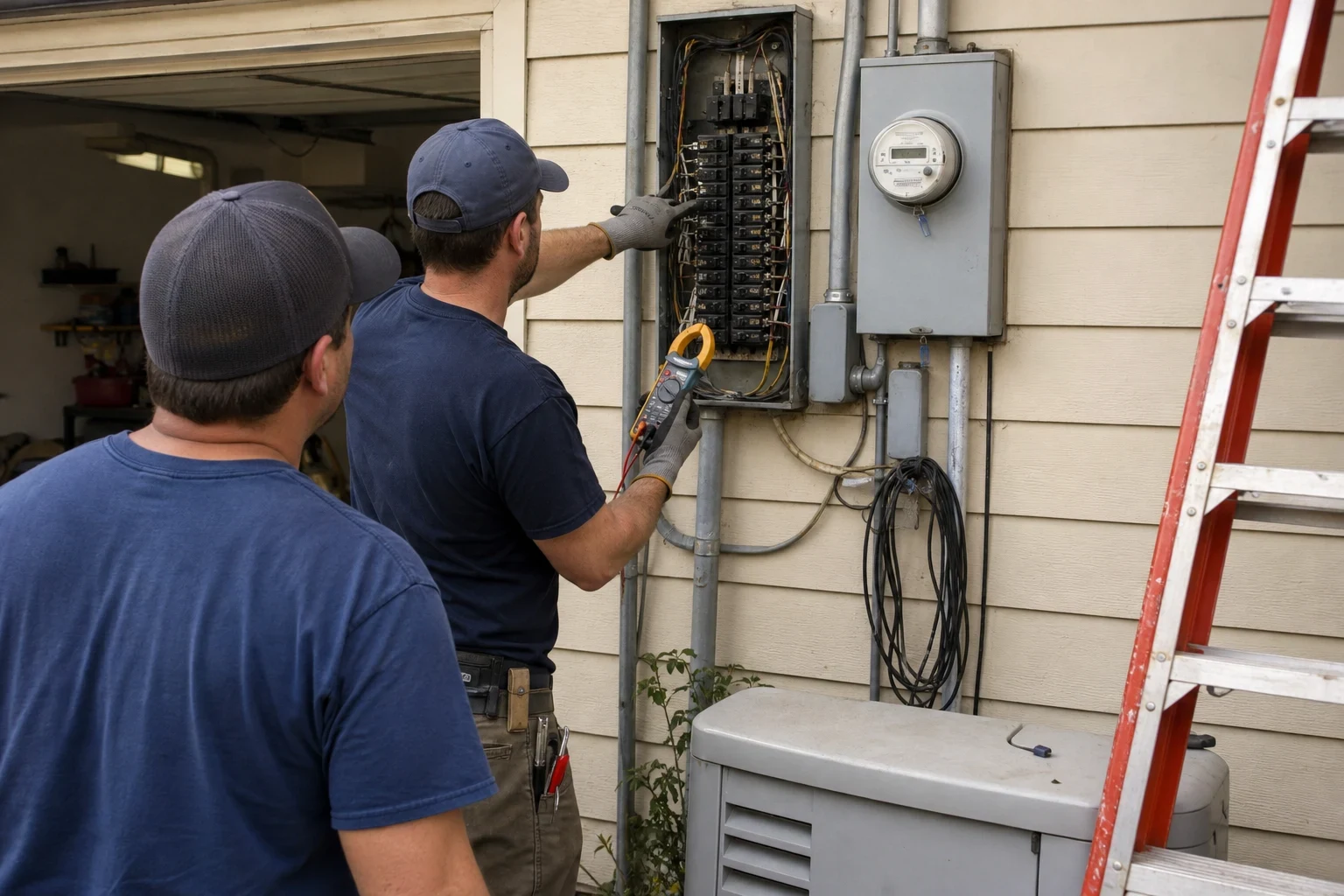
We open the panel, test voltage and connections, measure your load, and check the meter base and service drop outside. You receive a written scope, with photos of anything that worries us.
- 2
Filing and setting a date
After you approve the scope, we file the permit and book the utility if a disconnect is needed. You hear in advance how long the house will be without power so you can plan.
- 3
The changeover
Floors and walls near the panel are covered, the service is shut down and confirmed dead, and the old equipment comes out. Each circuit is landed in the new panel, torqued to the manufacturer's specification and checked before anything is energized. Power is usually back the same day, though the window depends on what turns up behind the old box.
- 4
Power-up, inspection and handover
Circuits come back one by one and each is confirmed working. When the inspection passes, we point out the main shutoff and explain the directory, and the work area is left as clean as we found it.
Panel Upgrade Questions
How long does a panel change take?
The changeover itself usually fits within one working day. Planning, permitting and utility scheduling add some lead time beforehand. If we find damaged service conductors or grounding problems during the work, we stop, show you, and explain how it affects the timeline.
Do you pull the permit?
Yes. We file the permit and arrange inspections as required by the local jurisdiction. You do not need to deal with the paperwork, and you will see the inspection result.
Will I need a bigger panel for an EV charger?
Not always. A load calculation tells us whether your existing service can carry a charger, sometimes with a load management device. If it can, we say so, and our EV charger installation page covers that work.
Can my old breakers be reused?
We do not reuse them. Breakers wear with age and heat, and they must be listed for the specific panel they sit in. New breakers matched to each circuit are part of doing the job safely.
What should I do before the work day?
Clear a few feet in front of the panel and the meter, and plan for refrigerators, medical devices and home offices to be without power for part of the day. We go over the details with you when we schedule.
Talk Through Your Panel With Us
Tell us what is tripping, warming or running out of room, and we will set a time to look at it properly. You get clear findings and a written scope before any decision.