ServicesEV Charger Installation
EV Charger Installation in Westworth Village
We put in Level 2 chargers on their own 240-volt circuit, sized for your vehicle, your panel and the distance to where you park. First we confirm your home can handle the added load safely, and then we finish the job neatly so it looks like it belongs.
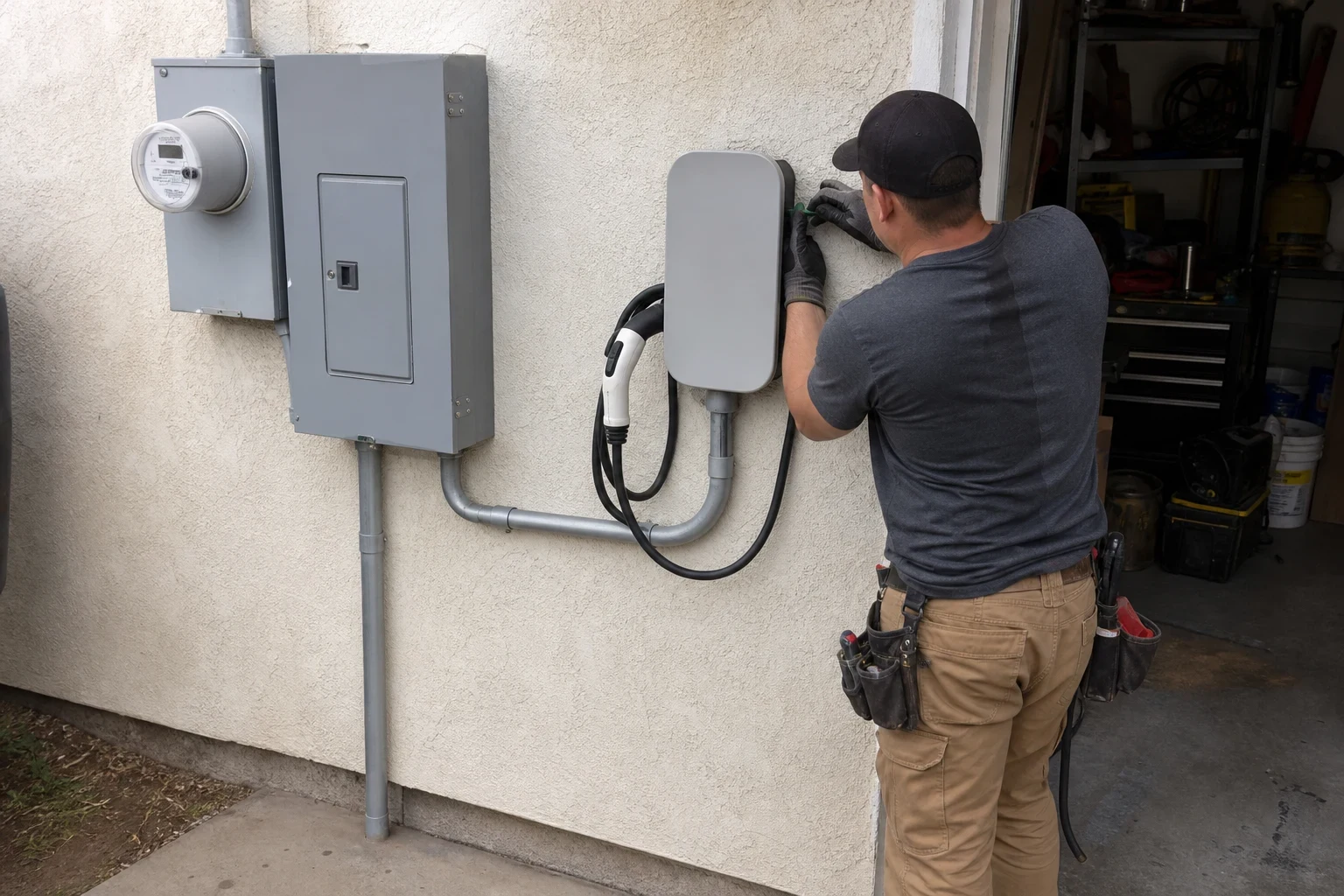
A Charger Your Electrical System Can Carry
An EV charger is one of the largest loads most homes will ever run, and it runs for hours at a time. That steady draw is what separates it from a dryer or an oven, and it is why we treat the installation as real circuit work rather than a quick outlet swap.
We start with your panel. We look at its capacity, the space available for a new breaker and the condition of the connections already inside it. If there is room, we plan a circuit with the breaker and copper conductors sized for continuous charging. If there is not, we tell you plainly and walk through the options, from a lower-output setting on the charger to panel upgrades.
The result is a charger that fills your battery overnight without warm plugs, tripped breakers or a cord stretched across the garage floor.
What the Installation Includes
- Load calculation
- We add up what your home already draws and what the charger will add. That number decides the circuit size and tells us whether the panel can take it safely.
- Dedicated 240-volt circuit
- A new breaker and conductors serve the charger alone. Nothing else shares the circuit, so the car never competes with your air conditioning or kitchen.
- Hardwired unit or 14-50 outlet
- We install a hardwired wall charger or a NEMA 14-50 receptacle for a plug-in unit, with the ground-fault protection code requires. We help you choose based on how you charge and what your car came with.
- Tidy conduit and mounting
- Wiring runs in conduit along walls and ceilings, squared and strapped neatly. The charger is mounted at a height and spot that keeps the cable off the floor and clear of the door.
- Outdoor-rated hardware
- For a driveway or carport location, we use weather-rated boxes, fittings and covers suited to North Texas heat and storms.
- Testing and handover
- We verify voltage, check the breaker under load and charge your car with you before we leave.
Signs It Is Time for a Proper Charger
A new EV is on order
Planning before delivery means the circuit is ready the day the car arrives, and the permit has time to move.
Overnight charging is not enough
A standard 120-volt outlet adds only a few miles per hour. If you wake up short of a full day's driving, a Level 2 circuit fixes that.
You are using an extension cord
Household cords are not built for hours of heavy current. They heat up at the plug and along the length, which is a fire risk we would rather you stopped taking.
The plug or outlet feels warm
Heat or discoloration at an outlet you charge from points to a loose connection or an undersized circuit. Stop charging there and have it checked.
Breakers trip during charging
This usually means the car shares a circuit with other loads. A dedicated line removes the conflict.
How the Work Runs
- 1
Service visit and load check
We look at your panel, measure the path to where you park and talk through your car and charging habits. You leave the visit knowing whether your panel has room.
- 2
Written plan and permit
You get a clear scope covering circuit size, charger type and routing. We pull the permit as required by the local jurisdiction.
- 3
Installation day
Power to the affected circuit is shut off and locked out before work begins. We protect floors and stored belongings, run the conduit, set the breaker and mount the charger, usually within a single day for a straightforward garage install.
- 4
Testing and inspection
We test the circuit under load and arrange the inspection. Once it passes, the work is signed off.
- 5
Walkthrough
We show you the breaker, explain the charger settings and leave the garage swept and clear.
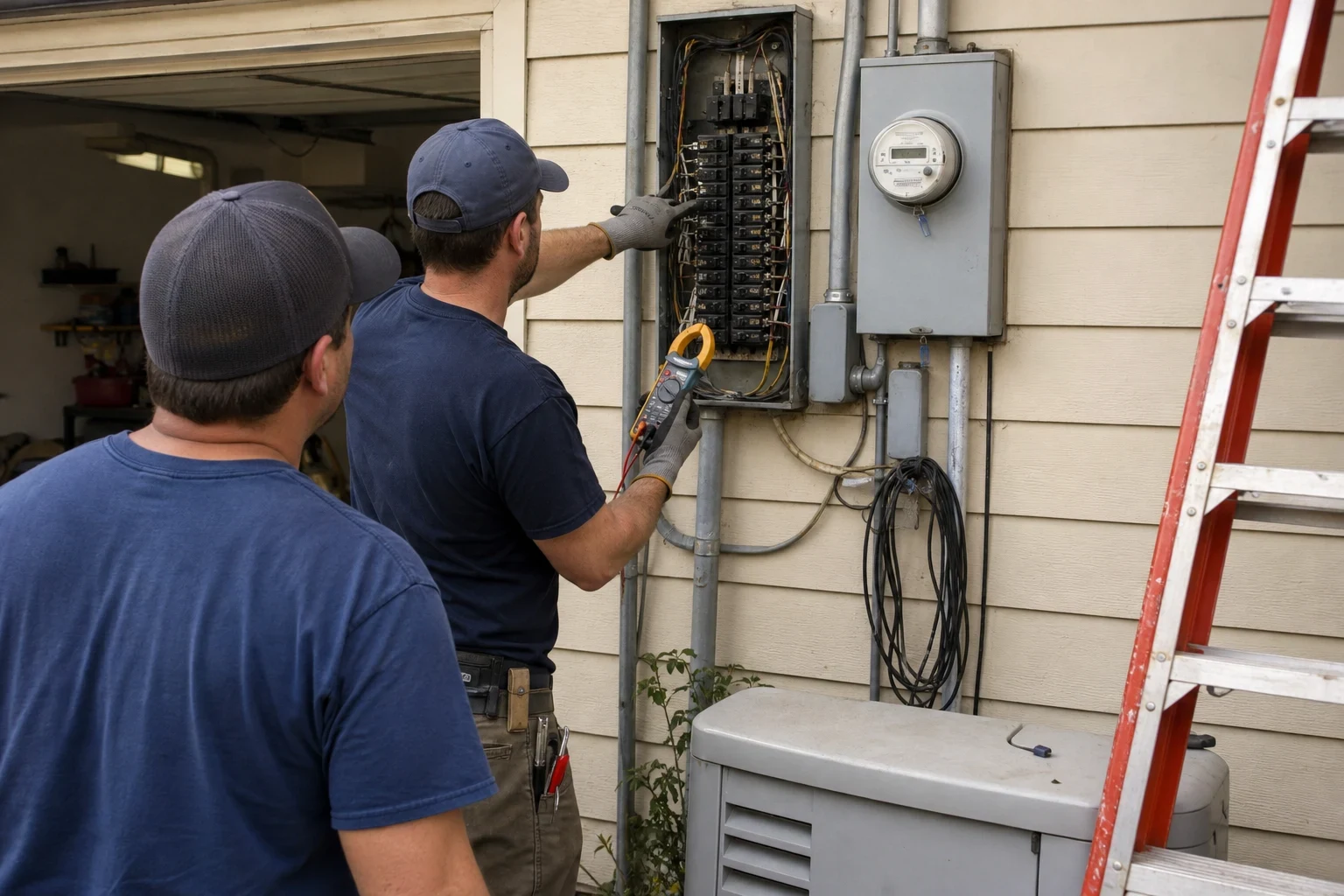
What Moves the Price
Every installation is priced from what we find at the visit. A charger a few feet from the panel is a very different job from one across a detached garage. We explain each line before work starts.
- Distance from the panel
- Longer runs need more conduit and heavier copper to keep voltage steady, and they take more time to route neatly.
- Panel capacity
- A panel with open space and spare capacity keeps things simple. A full or undersized panel may need a subpanel or an upgrade first.
- Charger type and output
- Hardwired units and higher-amperage chargers need larger breakers and conductors than a plug-in setup on a 14-50 outlet.
- Location and finish
- Outdoor mounting, finished walls and attic or crawl routing each change the materials and labor.
- Permit and inspection
- Required fees and inspection scheduling are part of the job and included in the written scope.
Common Questions About Home Charging
Something not covered here? (682) 895-6863
Can the charger go in my garage?
Yes, that is where most people want it. We place it close to your car's charge port as you normally park, so the cable reaches easily. Attached or detached garages are both fine; a detached one usually needs a longer run.
Does a charger mean I need a new panel?
Not necessarily. Our load calculation during the visit settles it. Plenty of homes can take a charger circuit without changes, and some chargers can be turned down to match the capacity you already have. If upgrading is the safer choice, we explain the reason.
Will you get the permit?
Yes. We obtain the permit the local jurisdiction requires and book the inspection, so the work is on record and has been checked.
Can you put in a charger I already purchased?
In most cases, yes. Give us the make and model when you schedule, and we will check what circuit it needs and that it is listed for safe use before we plan the wiring.
Hardwired or plug-in: which should I choose?
Hardwiring permits higher output and leaves no plug to wear out. A 14-50 outlet keeps things flexible if you might switch chargers later. We go over both during the visit.
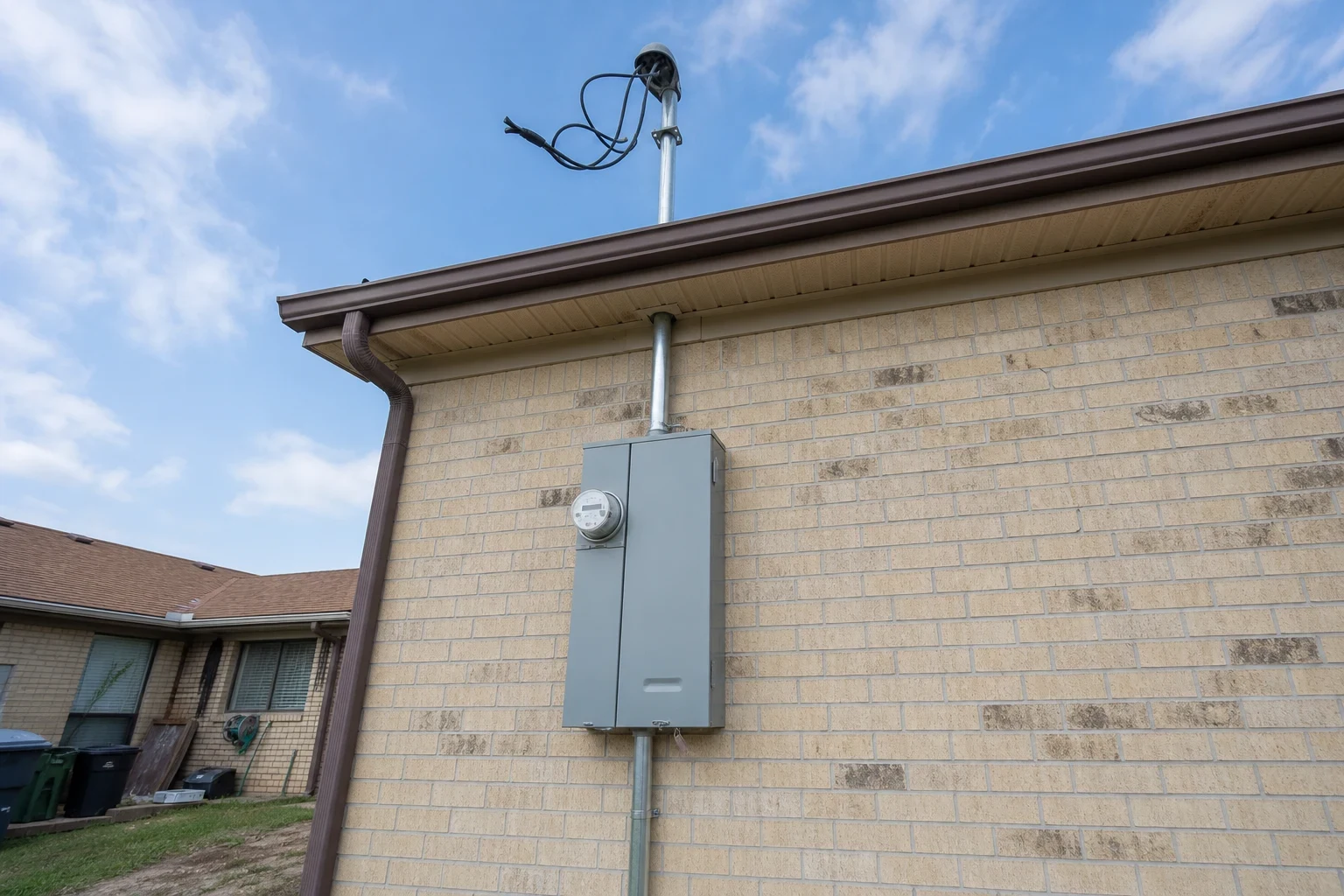
Ready to Charge at Home
We will look at your panel, plan the circuit and give you a clear scope before anything is installed. Serving Westworth Village and nearby towns including River Oaks, White Settlement and Fort Worth.